Fill the form below,
or you can also send inquiry to info@octalflange.com
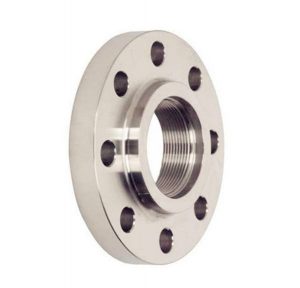
ASTM A694/A694M flanges are forged or rolled from carbon or alloy steel to meet grade-specific strength requirements for high-strength transmission-service piping. The material grades are differentiated primarily by minimum yield strength, allowing the flange material to be matched to the strength level of the connected pipeline and its design conditions.
ASTM A694/A694M defines the material, forging and testing requirements rather than the complete flange geometry. Finished flange size, pressure Class, facing, drilling and dimensions are specified separately by standards such as ASME B16.5, ASME B16.47 or the applicable MSS standard.
Standard Scope
ASTM A694/A694M covers forged or rolled steel pipe flanges, forged fittings, valves and similar parts for high-strength transmission-service piping. The specification includes several material grades differentiated primarily by their minimum yield strength requirements.
The grade number provides a direct indication of the specified minimum yield-strength level; however, grade selection also needs to consider the connected pipe material, design conditions and project specification.
Table 1
Grade | Yield Strength (0.2% offset),min, ksi [MPa] | Tensile Strength, min, ksi [MPa] | Elongation in 2 in, or 50 mm, min % |
|---|---|---|---|
F42 | 42 [290] | 60 [415] | 20 |
F46 | 46 [315] | 60 [415] | 20 |
F48 | 48 [330] | 62 [420] | 20 |
F50 | 50 [345] | 64 [440] | 20 |
F52 | 52 [360] | 66 [455] | 20 |
F56 | 56 [385] | 68 [470] | 20 |
F60 | 60 [415] | 75 [515] | 20 |
F65 | 65 [450] | 77 [530] | 20 |
F70 | 70 [485] | 82 [565] | 18 |
Units
ASTM A694/A694M is expressed in both inch-pound and SI units. Unless the order specifies the applicable “M” designation for SI units, the material is furnished using inch-pound units. Values from the two systems should be applied independently rather than mixed.
Reference Standard
In addition to the reference standards listed in Specification A961, the following standards also apply to this specification.
ASTM Standards:
- A53/A53M Specification for pipe, steel, black and hot-dipped, zinc-coated, welded and seamless
- A106 Specification for Seamless Carbon Steel Pipe for High-Temperature Service
- A381 Specification for Metal-Arc-Welded Steel Pipe for Use with High-Pressure Transmission Systems
- A707/A 707M Specification for Forged Carbon and Alloy Steel Flanges for Low-Temperature Service
- A788 Specification for Steel Forgings, General Requirements
- A961 Specification for Common Requirements for Steel Flanges, Forged Fittings, Valves, and Parts for Piping Applications
ASME Standards:
- ASME B 16.5 Steel Pipe Flanges and Flanged Fittings
- ASME B 16.9 Steel Butt-Welding Fittings
- ASME B 16.10 Face-to-Face and End-to-End Dimensions of Ferrous Valves
- ASME B 16.11 Forged Steel Fittings, Socket Welding and Threaded
- ASME B 16.28 Wrought Steel Butt-Welding Short Radius Elbows
- ASME B 16.47 Large Diameter Steel Flanges
MSS Standards:
- MSS SP-44 Standard for Steel Pipe Line Flange
- MSS SP-75 Specification for High-Test Welding Fittings
- MSS SP-95 Swage (d) Nipples and Bull Plugs
- MSS SP-97 Integrally Reinforced Forged Branch Outlet Fittings
API Standard:
- API 5L Specification for Line Pipe
General requirements
Material supplied to ASTM A694/A694M is also subject to the applicable common requirements of ASTM A961/A961M and any additional requirements stated in the purchase order. ASTM A961/A961M covers common requirements for steel flanges, forged fittings, valves and other piping components supplied under ASTM A694/A694M and related product specifications.
Manufacturing process
Melting Process
The steel material under A694 shall adopt one of the following smelting processes: open furnace, electric furnace or oxygen top-blown converter. Moreover, steel should be completely deoxidized.
As agreed by the buyer and manufacturer, the material shall be carbon steel, high strength low alloy steel or alloy steel. Further more, manufacturer shall report the chemical composition of the used material. All the produced products shall be adapted to welded on the pipes of ASTM A53, ASTM A106, ASTM A381, API 5L or the fittings of MSS SP-75.
Manufacturing Practice:
Starting material is processed by hot working sufficient to develop a wrought structure throughout the component. Flanges are produced by forging or rolling and are not manufactured simply by machining the finished flange directly from plate or solid bar stock.
Hot working shall be sufficient to develop a wrought structure throughout the part.
Flanges shall not be machined directly from plate nor from solid bar stock.
Heat treatment
Forgings are heat treated as required by the applicable ASTM A694/A694M grade and material type to obtain the specified mechanical properties. The heat-treatment condition should be verified together with the grade, mechanical test results and material certification during project acceptance.
Tempering temperature shall be at least 1000 ℉ [540 ℃], precipitation heat treatment of alloy steel shall be in range from 1000 to 1225 ℉ [540 ℃ to 665 ℃].
Chemical composition
The smelting analysis shall be carried out in accordance with the provisions of Specification A961, and the results of the analysis shall comply with the chemical composition requirements given in Table 2.
Chemical Requirements | |
|---|---|
Element Composition, % Heat Analysis | |
Carbon, max | 0.3 |
Manganese, max | 1.6 |
Phosphorus, max | 0.025 |
Sulfur, max | 0.025 |
Silicon | 0.15-0.35 |
Copper | |
Nickel | |
Chromium | |
Molybdenum | |
Vanadium | |
Columbium (Niobium) | |
Boron | |
Note: All elements listed in Table 2 shall be reported. Where no composition limit is listed, values are to be reported but no limits apply except as covered in 6.3. (Alloy steel shall conform to Grade L5 of A707/707M)
Tensile Strength
The mechanical properties are tested in accordance with the requirements of Specification A 961. The tensile mechanical properties of the materials are to comply with the requirements of Table 1.
Process quality, precision and appearance
Forgings shall be free of the detrimental defects described in Specification A961.
Repair by Welding
- Repair by welding of injurious defects-repair of injurious defects shall be comply with A961/A.961M
- Deposited weld metal shall be capable of meeting all mechanical properties upon heat treatment.
- All forgings to be repaired by welding shall be repair welded prior to heat treatment.
Where purchaser approval of repair welding is required, Supplementary Requirement S1 should be specified in the purchase order. Repair-welding requirements therefore need to be defined at the RFQ stage rather than assumed after manufacture.
Rejection and rehearing
The purchaser shall comply with the requirements of Specification A961/A961M.
Product Marking
Marking shall comply with A961/A961M, and with following requirements:
- Forging repaired by welding shall be marked with the letter ''W'' following the ASTM designation.
- Use Bar Coding, specified by the buyer.
ASTM A694 Flange Selection
Selecting an ASTM A694 flange starts with the required strength level of the transmission piping. The A694 grade, connected pipe material, flange dimensional standard and design conditions should be reviewed together rather than selecting the flange from grade designation alone.
Match the Grade to the Piping System
ASTM A694 grades are differentiated primarily by minimum yield strength. For pipeline projects, the selected flange grade should therefore be checked against the connected pipe specification, required strength level and project design basis.
Define the Flange Configuration
ASTM A694/A694M specifies the material requirements, but it does not alone define the finished flange dimensions. Specify the applicable dimensional standard, NPS, pressure Class, flange type, facing and bore configuration separately.
ASME B16.5 applies to flange sizes through NPS 24 within its stated Class ranges, while ASME B16.47 covers large-diameter flanges from NPS 26 through NPS 60.
Verify Material and Manufacturing Records
Project acceptance should confirm the specified A694 grade, chemical analysis, mechanical properties, heat-treatment condition, dimensional inspection and required material traceability. Where repair-welding approval or other supplementary requirements apply, they should be stated in the purchase order.
RFQ Information
A complete ASTM A694 flange inquiry should include the required grade, ASTM edition, flange standard, NPS, pressure Class, flange type, facing, bore or connected pipe dimensions, quantity, design conditions and required inspection documentation.
FAQ
Q: What is the difference between ASTM A694 F52 and F65?
A: The principal distinction is the required minimum yield-strength level. Final grade selection also depends on the connected pipe strength and project specification.
Q: Does ASTM A694 define flange dimensions?
A: No. ASTM A694/A694M defines material requirements. Flange dimensions and pressure Class are established by the applicable ASME or MSS dimensional standard.
Q: Is ASTM A694 only for liquid pipelines?
A: No. ASTM describes A694 components for high-pressure transmission service and high-strength transmission-service piping; the specification is not limited to liquid service.
Q: What should be specified when ordering an ASTM A694 flange?
A: State the A694 grade and edition, flange standard, NPS, Class, type, facing, bore, quantity, design conditions and required inspection or material documentation.
Contact Us Now for an Immediate Offer
Related Products
Slip On Flange
Weld Neck Flange
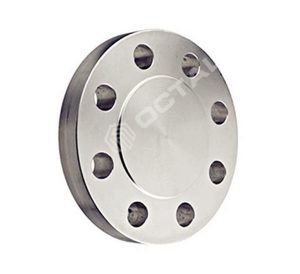
Blind Flange
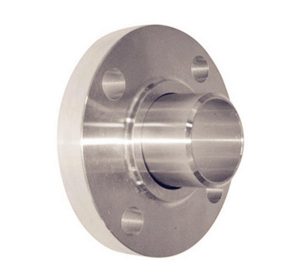
Lap Joint Flange
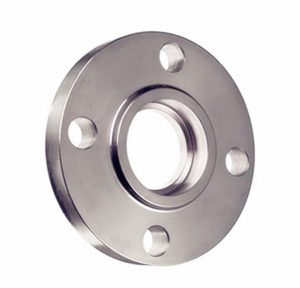
Socket Weld Flange